What is Cost and Carbon Estimating in Construction (and Why It Matters in 2026)
What is Cost and Carbon Estimating?
Cost and carbon estimating is the process of calculating both the financial cost and the environmental impact of a construction project using the same underlying data. Instead of producing separate estimates, this approach treats cost and carbon as two outputs from a single, integrated workflow.
In practical terms, this means that every element of a project is assessed not just in terms of price, but also in terms of its carbon footprint. Materials, labour, plant, and subcontract activities are all quantified and linked to both cost rates and carbon values, enabling a more complete understanding of project impact from the outset.
Why Cost and Carbon Estimating Matters in 2026
Construction is under increasing pressure to deliver not only on budget and programme, but also on sustainability targets. Governments, clients, and investors now expect clear, auditable carbon data alongside traditional cost estimates.
In 2026, this is no longer optional. Regulatory requirements, net zero commitments, and ESG reporting frameworks are driving a shift towards more transparent and data-driven estimating practices. Organisations that cannot demonstrate both cost and carbon performance are at a growing disadvantage in competitive tenders.
Key drivers include:
Net zero commitments across public and private sectors
Mandatory carbon reporting on major projects
Increased client demand for sustainable outcomes
Greater scrutiny of supply chain emissions
The need for better decision making at early design stages
The Concept of Dual Currency Estimating
Dual currency estimating is the foundation of modern cost & carbon workflows. It refers to the ability to measure and manage cost & carbon together, using the same quantities and resources.
Rather than creating separate carbon assessments after an estimate is complete, dual currency estimating integrates both outputs from the start. This ensures that any design or specification decision can be evaluated in terms of both financial and environmental impact.
The result is a more balanced approach to decision making, where trade-offs between cost & carbon can be clearly understood and managed.
What dual currency enables:
Real-time comparison of cost versus carbon options
More informed design and procurement decisions
Alignment between commercial and sustainability teams
Consistent data across the project lifecycle
How Cost and Carbon Estimating Works
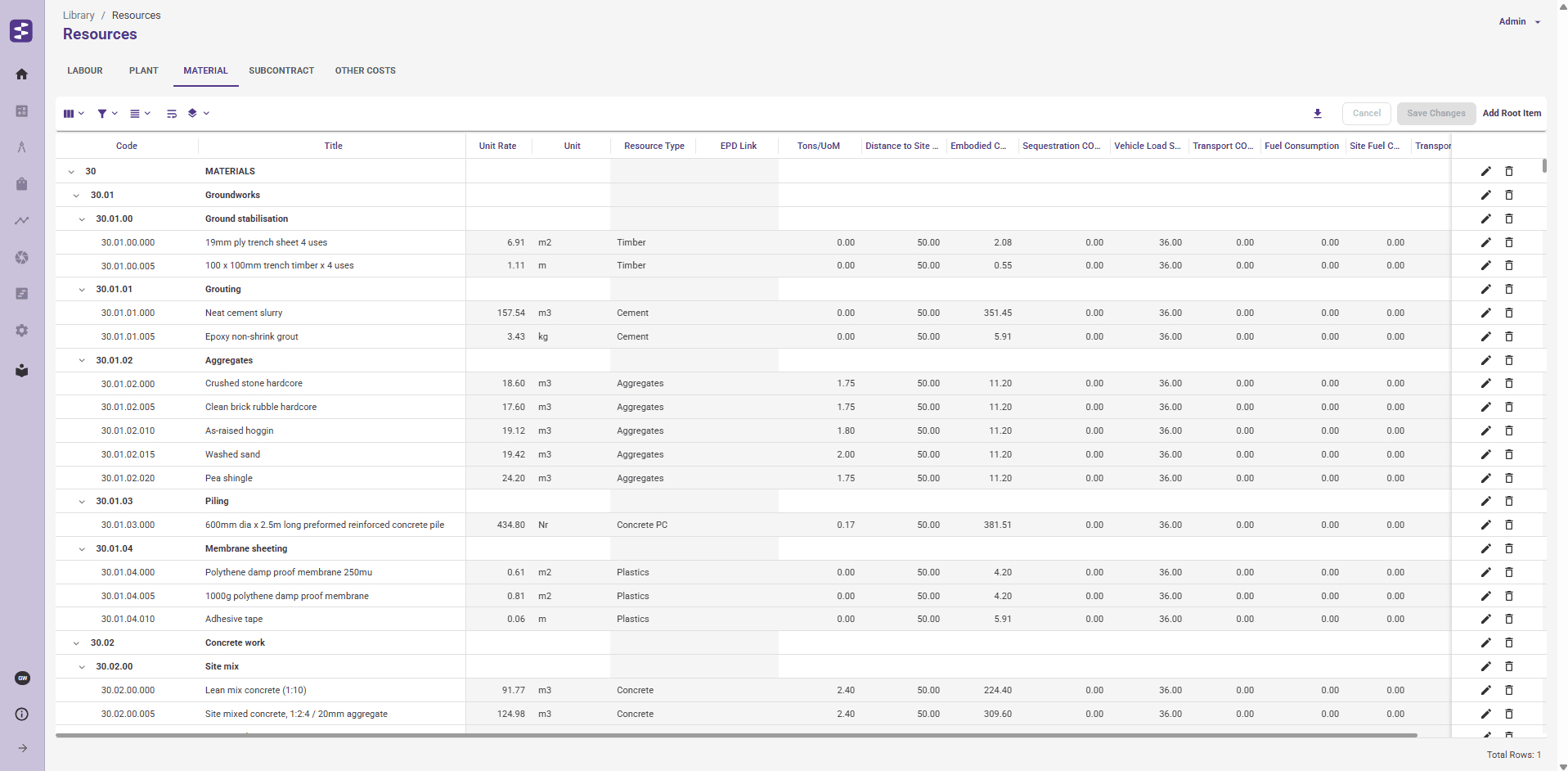
At its core, cost & carbon estimating relies on a resource-based approach. This means breaking down a project into its fundamental components and assigning both cost & carbon data to each element.
The process typically involves:
Measuring quantities through 2D and 3D takeoff
Assigning resources such as labour, plant, and materials
Applying cost rates and carbon factors to each resource
Aggregating results into a structured estimate
This approach ensures that both cost & carbon are derived from the same source of truth, improving accuracy and reducing the risk of discrepancies between different reports.
The Role of Resource-Based Estimating
Resource-based estimating is essential for accurate cost and carbon outputs. High-level or approximate methods often fail to capture the true impact of construction activities, particularly when it comes to carbon.
By working at a detailed level, estimators can account for:
Specific material types and their embodied carbon
Labour activities and associated emissions
Plant usage and fuel consumption
Transport and installation impacts
This level of detail provides a far more reliable basis for both cost control and sustainability reporting.
Regulatory and Industry Drivers
The shift towards cost & carbon estimating is being accelerated by a range of regulatory and industry factors. In the UK and globally, there is a clear move towards standardised approaches to measuring and reporting carbon.
Frameworks and standards are increasingly requiring:
Whole life carbon assessments
Transparent reporting of embodied emissions
Alignment with lifecycle standards such as NRM3 and ICMS
Integration of carbon data into procurement processes
These requirements are pushing organisations to adopt more robust and integrated estimating practices.
The Challenge: Separate Cost and Carbon Workflows
Despite the growing importance of carbon, many organisations still treat cost and carbon as separate processes. Cost estimates are often produced by commercial teams, while carbon assessments are handled by sustainability specialists using different tools and data sets.
This separation creates several challenges:
Duplication of effort and inconsistent data
Difficulty aligning cost and carbon outputs
Delays in decision making
Increased risk of errors and misinterpretation
Without integration, it becomes difficult to maintain a single, reliable view of project performance.
Integrating Cost & Carbon into a Single Workflow
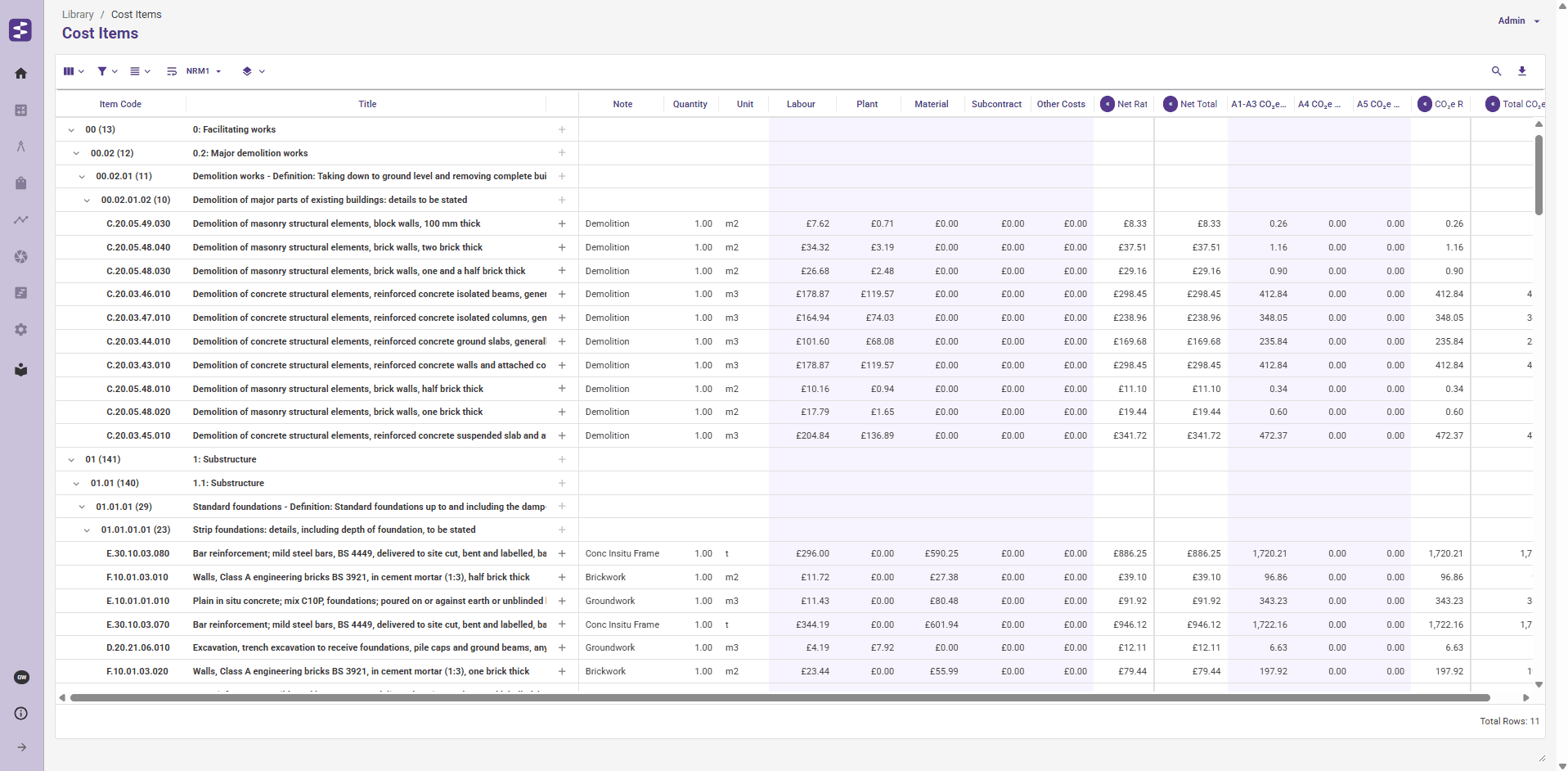
Modern SaaS platforms are enabling a shift towards fully integrated cost & carbon estimating. By bringing both disciplines together within a single system, organisations can streamline workflows and improve data consistency.
An integrated approach allows:
Shared quantities between cost & carbon calculations
Real-time updates as designs evolve
Centralised data for reporting and audit
Better collaboration between teams
This not only improves efficiency but also ensures that decisions are based on accurate and aligned information.
The Benefits of Cost and Carbon Estimating
Adopting a dual currency approach delivers significant benefits across the project lifecycle. It enables organisations to move beyond reactive reporting and towards proactive decision making.
Key benefits include:
Improved accuracy in both cost and carbon estimates
Reduced rework through aligned workflows
Greater transparency for clients and stakeholders
Enhanced ability to meet regulatory requirements
Better optimisation of design and procurement strategies
The Future of Estimating in Construction
The direction of travel is clear. Estimating is evolving from a purely commercial function into a broader data-driven discipline that supports financial, environmental, and operational outcomes.
Advances in technology, including automation and AI, will continue to enhance how cost and carbon data is generated and used. Integrated platforms will become the standard, enabling seamless workflows from concept through to operation.
In this context, cost and carbon estimating is not just a trend. It is becoming a fundamental requirement for delivering modern construction projects.
Cost & carbon estimating represents a significant shift in how construction projects are planned and delivered. By treating cost & carbon as two sides of the same coin, organisations can make more informed decisions and deliver better outcomes.
In 2026, the question is no longer whether to adopt this approach, but how quickly it can be implemented. Those who embrace integrated, resource-based estimating will be better positioned to meet the demands of a rapidly changing industry.