//
September 2026 Platform Update

Sterling’s September 2026 platform release delivers a significant set of enhancements across Sterling Essentials, Takeoff, Forecasting, Lifecycle, Security and User Management. This release has a strong focus on improving programme management, project access control, Resource Library workflows, Takeoff revisioning, and the connection between cost, carbon and environmental data.
Forecasting receives some of the largest enhancements, including editing of uploaded programmes, WBS codes, baselines and constraints, configurable working calendars, programme exports, and improved change tracking. Elsewhere, Takeoff revision workflows have been expanded, Cost Item and Resource Libraries are easier to manage, and new project-level user assignments provide organisations with greater control over access to project information.
Sterling Essentials
Cost Planning & Estimating
Sterling Essentials continues to evolve around structured, reusable estimating data. This release introduces further enhancements to Cost Item and Resource Library workflows, making it easier to build, organise and reuse standard estimating information across projects and portfolios.
Resource management has also been enhanced with improved EPD integration and synchronisation, strengthening the connection between resource-based cost estimating and environmental data. This supports Sterling’s dual currency approach, where cost and carbon information can be managed together within the same estimating workflow.
Delivered Enhancements
Enhanced Cost Item Library with a new split-view experience and tabs
Improved Cost Item Library navigation and default sorting
Added structure assignment directly within Cost Item Libraries
Enhanced Resource Library assignment workflows
Improved Resource Manager synchronisation
Enhanced EPD selection and synchronisation for resources
Improved support for external environmental data integrations
Enhanced resource details and management experience
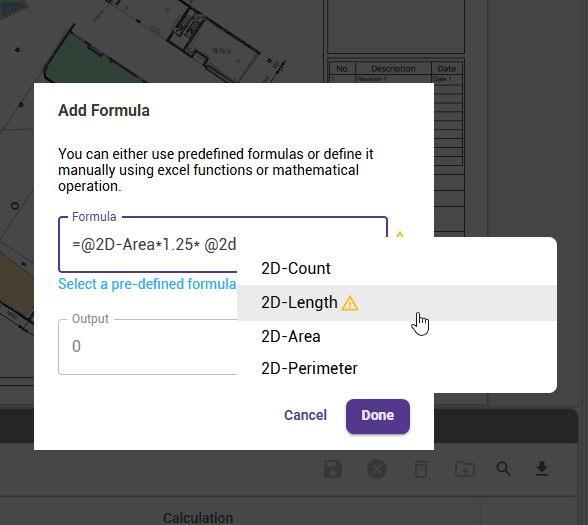
Improved formula suggestions within 2D measurement workflows
Improved assignment of Takeoff Items into Cost Plans
Continued improvements to Cost Plan and Resource Manager performance
Takeoff
Takeoff receives another major set of enhancements focused on revision management, document handling and working with increasingly complex 2D and 3D project information.
A new Revision Model Browser provides greater control when reviewing revised models, including synchronised selection and visibility between the browser and viewer. Takeoff comparison workflows have also been enhanced to better handle structured and unstructured information, helping users understand design change and its impact on quantities and downstream Cost Plans.
Delivered Enhancements
Introduced the new Revision Model Browser
Added synchronised selection between the Revision Model Browser and 3D viewer
Added model visibility controls during revision review
Enhanced Takeoff revision comparison workflows
Improved handling of structured and unstructured Takeoff Items during comparison
Enhanced 2D revision selection between drawings and measurement grids
Improved Takeoff Documents archive management
Added tile-based document archive controls
Added enhanced three-state archive filtering
Improved handling of large Takeoff files
Enhanced 2D formula suggestions based on measurement headers
Improved arc detection within 2D Takeoff
Improved measurement and object grid editing
Enhanced Takeoff Item structure management
Continued enhancements to the Sterling Takeoff Viewer
Forecasting Management
Forecasting is a major focus of the September release, with a substantial expansion of Sterling’s programme management capabilities. Uploaded programmes can now be edited directly within Sterling, allowing teams to work with imported planning information without having to continually return to the originating scheduling application for everyday changes.
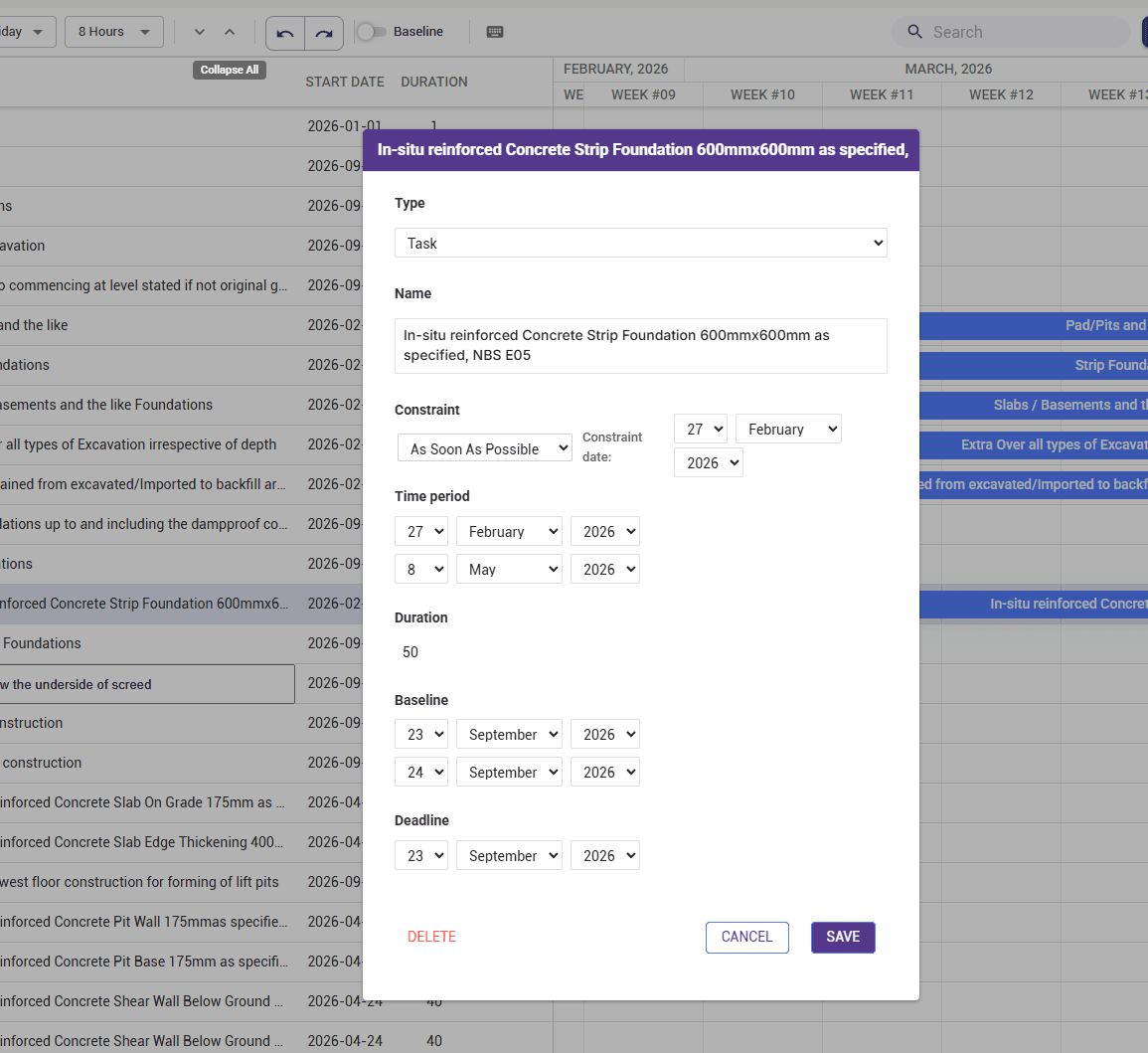
Programme interoperability has also been significantly expanded. Sterling now provides enhanced support for WBS codes, baselines, constraints, working calendars and programme exports, helping commercial and project controls teams maintain stronger alignment between the programme, forecast and underlying project information.
Delivered Enhancements
Added editing of uploaded programmes directly within Sterling
Added persistent WBS code support
Added programme baselines
Added programme constraints
Enhanced XER programme import
Added configurable default working weeks
Added configurable working hours
Added support for fractional activity durations
Added programme export to supported formats
Enhanced multi-stage Excel export
Added Created By and Updated By information to programme data
Improved inline task creation and keyboard navigation
Enhanced programme editing experience
Improved programme histogram presentation
Enhanced automatic filtering of programme information
Improved programme change and revision handling
Improved handling of master programmes
These enhancements bring programme and commercial information closer together, helping teams understand not simply what something costs, but when those costs and resources are expected to occur.
Lifecycle
Lifecycle receives further improvements to calculation and assessment workflows, supporting more reliable whole-life cost and carbon analysis across longer assessment periods.
Updates strengthen the handling of lifecycle activities including renewal, maintenance, operation and end-of-life information, helping organisations develop a more complete view of assets beyond initial capital expenditure.
Delivered Enhancements
Enhanced lifecycle assessment period handling
Improved renewal calculations
Enhanced maintenance calculations
Improved operational lifecycle information
Enhanced end-of-life calculations
Improved creation and management of lifecycle project data
Greater consistency across whole-life cost and carbon calculations
Security & User Management
September introduces an important enhancement to Sterling’s enterprise access model with project-level user assignments. Organisations can now manage which users are assigned to individual projects, providing greater control as portfolios grow and more internal teams, consultants and delivery partners collaborate within Sterling.
Portfolio and user administration has also been enhanced with an improved Users grid and associated management actions. Access controls have been strengthened around active portfolios, providing a more scalable foundation for enterprise deployments containing multiple portfolios, projects and user groups.
Delivered Enhancements
Added project-level user assignments
Added enhanced project access management
Users creating projects are automatically assigned to those projects
Introduced an enhanced Users management grid
Added additional user administration actions
Enhanced portfolio-level user management
Restricted access to active portfolios
Improved role handling across portfolio and project environments
Strengthened the foundation for enterprise-scale user and project governance
User Experience & Performance
Alongside the headline functionality, the September release includes further improvements to performance and everyday interaction across Sterling. Particular attention has been given to large file handling, keyboard-based workflows, viewer behaviour and consistency across the platform.
These enhancements are designed to reduce friction for users working intensively within Sterling and provide a more responsive experience as projects and datasets increase in scale.
Delivered Enhancements
Improved large file handling
Enhanced keyboard navigation and inline creation
Improved grid selection and paste workflows
Improved toolbar consistency across modules
Enhanced viewer window management
Improved programme editing sessions
Enhanced Cost Plan and Resource Manager refresh behaviour
Continued Takeoff Viewer performance improvements
Summary
The September 2026 release represents another substantial step forward for Sterling, particularly across Forecasting, Takeoff, resource-based estimating and enterprise project management.
From editing imported programmes and managing WBS codes, baselines and constraints, to reviewing design revisions through the new Revision Model Browser, synchronising EPD data with resources, and controlling user access at individual project level, this release continues to connect the people, processes and data involved in cost, carbon, estimating and project controls within a single environment.